If you’re looking for a gym in Wake Forest and you want real coaching but don’t want to pay for one-on-one sessions long term, you’re probably weighing small group coaching against personal training. Both can work. Which one fits depends on your goal, your timeline, and your budget. Here is how we see it at Forest District CrossFit.
Two ways to get coached: what small group and personal training actually look like
In our small group classes, your coach briefs you on the workout when you come in. Then the coach leads a general warm-up to get your body primed and ready. After that comes a specific warm-up, where you practice, fine-tune, or progress the movements you’ll do in the workout. After the workout, you’re led through a cool-down with stretching and mobility work, accessory movements, or skill work before you leave.
A personal training session follows a similar flow. You’re briefed on what the session will look like, led through a general warm-up, then walked through a specific warm-up where you practice the movements you’ll actually do. Then you do the workout and finish with a structured cool-down. The biggest difference is that personal training sessions are prescribed to speed up your progress, which is why it’s always the most expensive option.
The thing most people get wrong with both is thinking they’re paying for a number of sessions. You’re really paying for a result. A good gym, trainer, or coach should tell you, based on your goals, how many personal training sessions it will take to get there, or how long you need to sign up for classes before you can reach your fitness goals.
Say you do a consultation before signing up and tell the coach you want to lose 25 pounds. Depending on your exercise background, movement limitations, and what your stress, diet, and sleep look like, that could take anywhere from 6 to 18 months. The coach should be able to tell you the truth about that time frame and offer the class membership option that best fits it. Personal training is no different. You’re paying for a result, not the trainer’s time.
How much coaching time do you really get in each option?
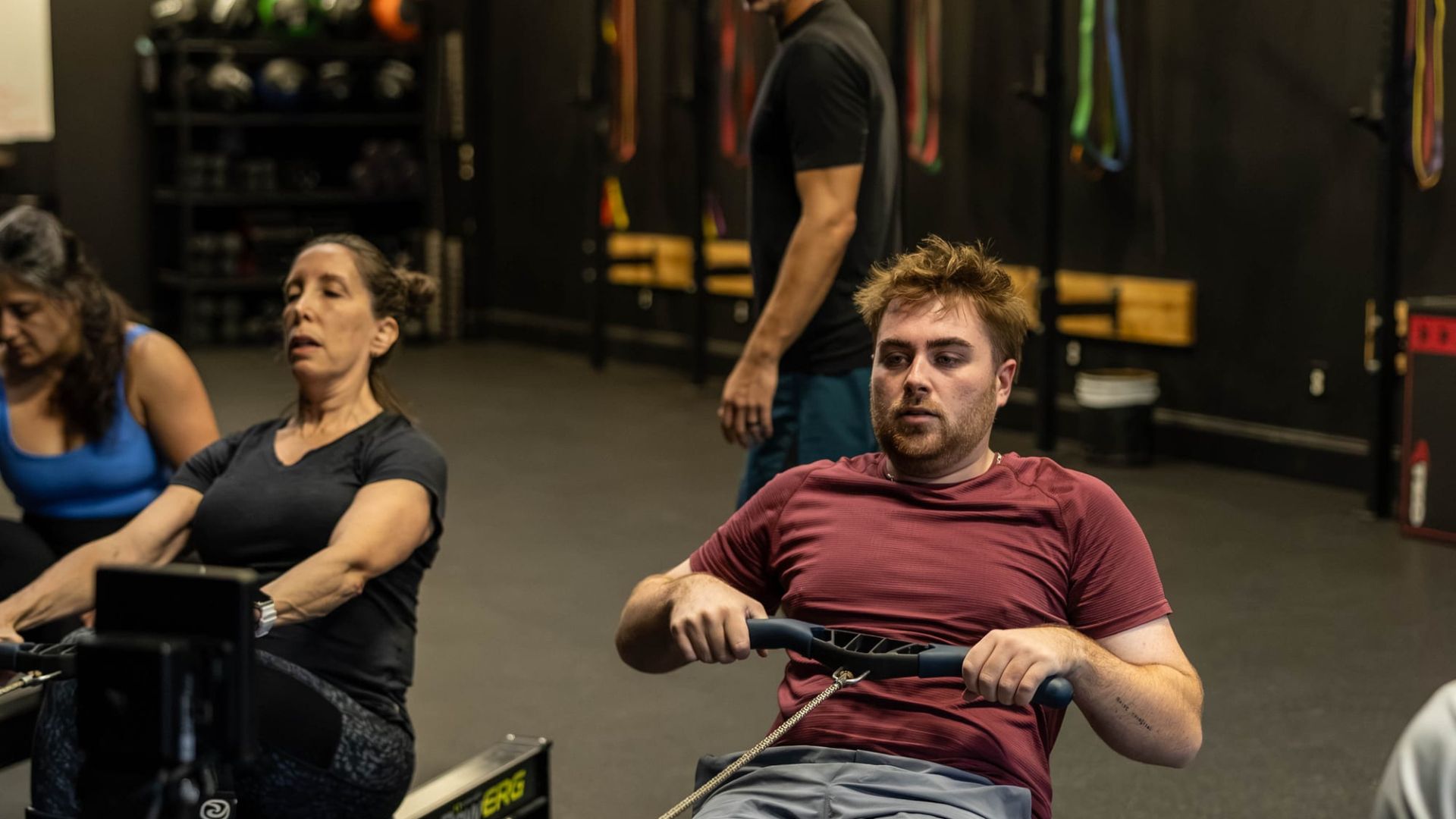
In our small group classes, you can realistically expect a good amount of one-on-one attention. We have a general rule among our coaches that every member should receive some form of coaching feedback in at least three different areas, ways, and moments every class. That often looks like cueing during the warm-up, feedback on scaling or modification, and coaching during the actual workout.
The difference is in the type of attention. In a group class, the coach focuses on one common theme for the whole group. Take the deadlift as an example: the main theme for the class might be keeping a flat back through the movement. In a private session, the coach can work on other points of the deadlift in addition to the flat back.
Structure and accountability: what keeps you showing up
For our group class members, we follow programming provided by CrossFit and tailor it to meet the needs of our community. We have set class times Monday through Saturday, and each person is responsible for tracking their own progress. Most people come in on the same days and times each week. When someone misses their normal class time multiple times, a coach will text to check in. Often a member of that class they’ve become close friends with will check in on them too.
Personal training is different. Sessions can happen at any time of day and may change from week to week depending on the schedules of the trainer and the client. The programming is very specific to the client, and your coach keeps track of your progress.
What to weigh when budget matters (without guessing at prices)
When you’re deciding between small group classes and personal training, compare a few things. What are you comfortable paying per session? How many times per week will you go? What’s the length of commitment? Is anything else included outside of the sessions?
When someone comes to us unsure which way to go, I ask about their specific goal and how fast they need to get there. If they want to get there quickly, I tell them personal training is their best option. If they don’t have a specific timeframe, we look at the cost of one personal training session and compare it to how many small group classes they could do for the same price. Usually the price of 3 to 6 small group classes equals the price of 1 personal training session.
When personal training is the better fit
There are situations where I would honestly tell someone personal training is better than small group classes. One is an injury they’re coming back from, or an injury that keeps them from doing majority of the movements they’ll see in a group class. Another is a very specific skill or event they want to train for. A third is being brand new to exercise or any form of fitness, where personal training is the better start to build confidence before entering a group setting.
A private session can individualize workouts around an injury or help rehab it. It can also be programmed to get someone ready for a race or an event, or to hit a very specific goal like a pull-up.
At Forest District CrossFit, our main offering is group classes. We do offer and recommend personal training, but it’s built around an end goal: overcoming an injury, achieving a very specific movement goal like a pull-up, training for an event or race, or gaining confidence before joining our group classes.
When small group coaching makes more sense
If you love community, group environments, having a good time with other people, and working hard with no ego, our group class is a great fit. You share the room with like-minded people who love working out, and you get a sense of belonging you wouldn’t get in a one-on-one or private session. Several people who joined our small group classes after doing personal training have told us they push harder when they work out with others than when they’re by themselves.
What to look for in a gym in Wake Forest if you want coaching without the one-on-one price tag
When you’re searching for a gym that offers small group coaching, start with a few questions. Do you, as an individual, do best in small classes or large ones? What culture are you looking for? Is everyone made to do the same workout, or does the gym offer scaling, modifications, and an individualized approach inside the group class? And does their class offerings fit your schedule – we’ve told multiple individuals that our gym isn’t a good fit or them because their person and work schedules do not align with our class offerings and they were extremely grateful we were honest and didn’t try to sell them a membership.
There are also red flags. One is whether their social media posts match who they say they work best with. If a gym says it’s “for everyone, including your grandmother,” but every post shows really young people with their shirts off doing crazy feats of fitness, I’d question whether it’s really for everyone, even grandmothers.
Another red flag is a gym that hangs its hat on coaching, cueing, and feedback, but its smallest group class is 20 people. It’s really hard to coach any one person, let alone make sure everyone gets feedback, when every class is jam-packed with 20-plus people.
Questions to ask before you commit to either option
A few questions to ask any gym or trainer before signing up:
- Does the class or personal training schedule match your personal and work schedule?
- How do the sessions or classes work, in terms of logistical flow?
- Is there a consult meeting or trial before you commit or sign up?
If you’re still not sure which way to go, reach out to a gym you’re considering and ask these questions directly. A good coach will talk through your goals and timeline with you before asking for your card.


